

In the ever-evolving landscape of financial markets, it’s natural to encounter periods of uncertainty and volatility. These fluctuations, while sometimes unsettling, are an inherent aspect of investing. Understanding and embracing this reality is crucial to achieving long-term financial success.
The Nature of Market Volatility
Market downturns can evoke concern and prompt questions about the stability of investments. However, it’s important to recognize that such periods are not anomalies but rather integral components of the market cycle. Historically, markets have demonstrated resilience, often rebounding and reaching new heights after downturns. This cyclical behavior underscores the importance of maintaining a long-term perspective and resisting the urge to make impulsive decisions based on short-term market movements.
The Price of Admission
Investing is akin to embarking on a journey with its share of ups and downs. The occasional market turbulence represents the “price of admission” for the potential of long-term growth and wealth accumulation. Let’s look at a couple of examples.
Figure 1 below shows a 20% drawdown in 2011. Hibah Yousuf at CNNMoney wrote, “Stocks just closed out the worst quarter since the 2008 financial crisis, and the swoon is hardly over. With worries about Greece’s solvency still in the spotlight, stocks kicked off the fourth quarter with a huge sell-off.” One year later, the S&P 500 was over 19% higher.
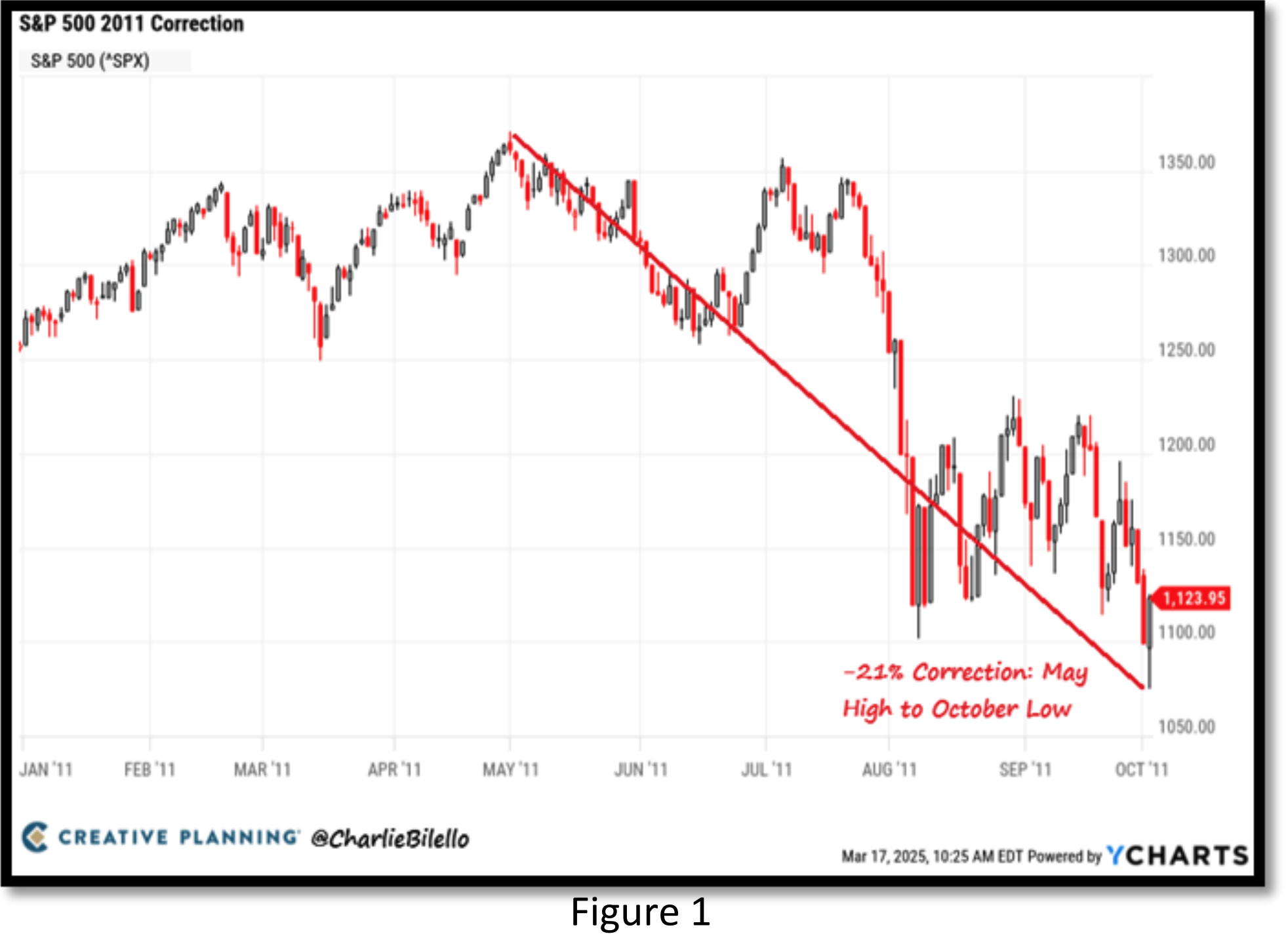
Figure 2 below is a more recent example.
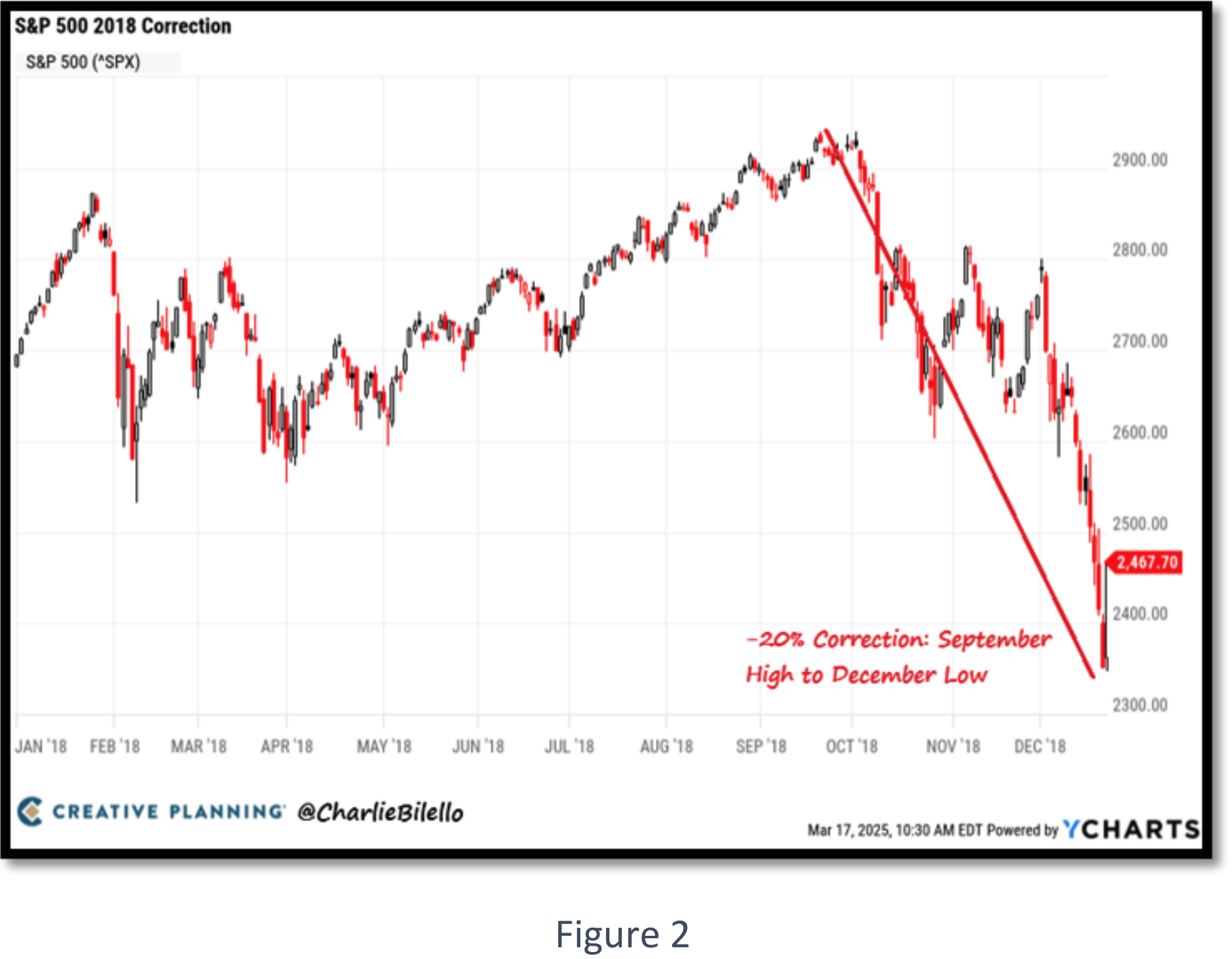
On December 24, 2018 David Goldman writing for CNN Business noted, “Wall Street, markets and business crave certainty. For the past month, they have been contending with confusion and disorder…Stocks followed their worst week since the Great Recession by plummeting yet again Monday. The last time the market fell this much in December was in 1931, during the Great Depression.”
One year later, the S&P was higher by over 23%. As mentioned above, volatile times like today are considered the price of admission.
Figure 3 below shows the ride.
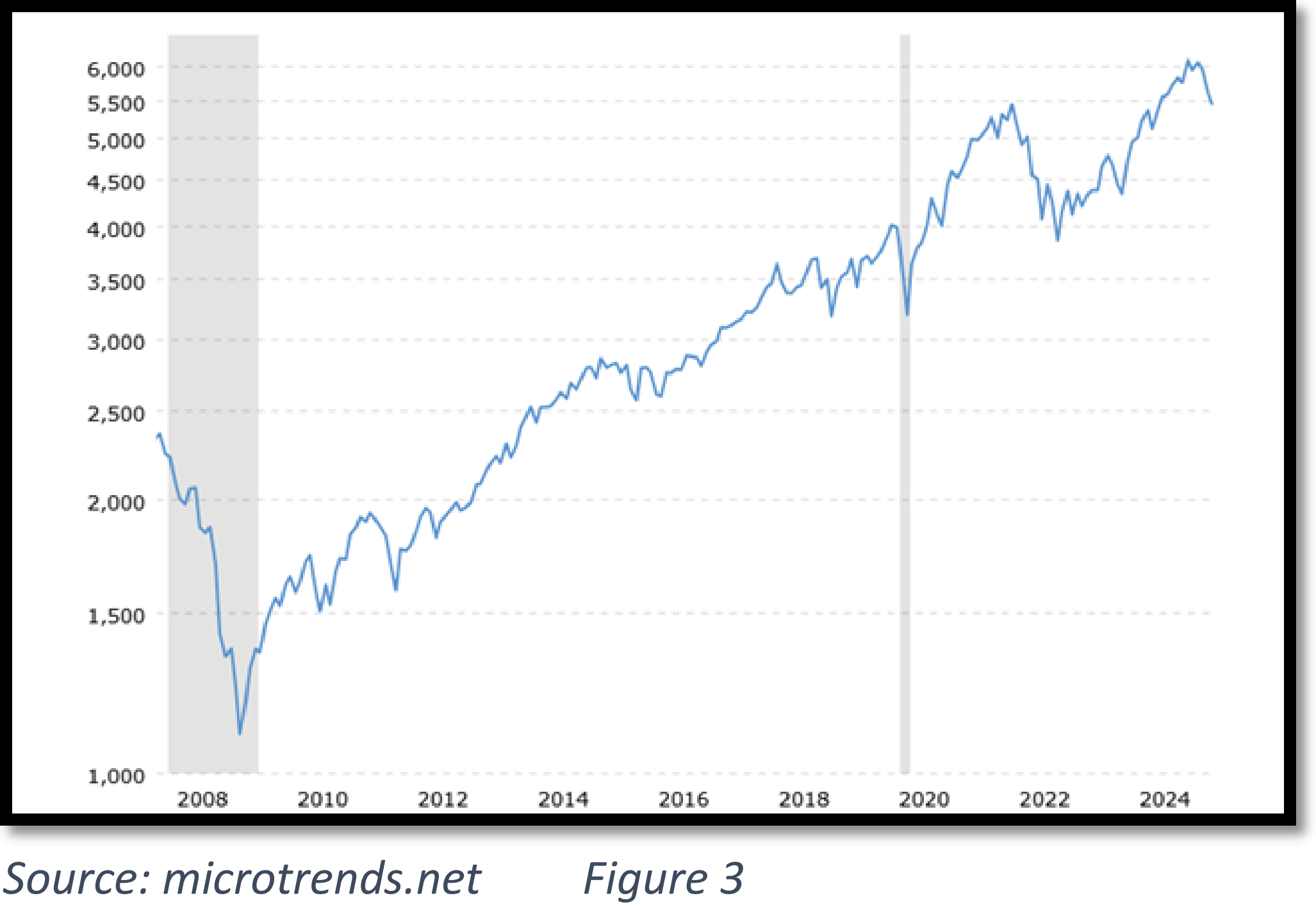
In Figure 3, which spans from October 2007 through April 3, 2025 the S&P total return was over 414%, or 9.87% annualized. The ride over those 17+ years has been anything but smooth. The chart is filled with periods of volatility. By accepting this inherent volatility, investors position themselves to reap the rewards that come with staying the course.
Strategies for Navigating Market Fluctuations
To effectively manage the ebbs and flows of the market, consider the following strategies:
- Diversification: Spreading investments across various asset classes can mitigate risk and reduce the impact of any single underperforming investment.
- Regular Portfolio Reviews: Periodically assessing your investment portfolio ensures alignment with your financial goals and risk tolerance, allowing for timely adjustments as needed.
- Focus on Long-Term Goals: Short-term market movements should not overshadow your long-term financial objectives. Staying committed to your investment plan is key to achieving desired outcomes.
- Consult with Professionals: Engaging with financial advisors provides personalized guidance tailored to your unique financial situation, helping you navigate market complexities with confidence.
Conclusion
Market volatility, while challenging, is a natural and expected aspect of investing. By understanding this reality and implementing prudent investment strategies, you can navigate these fluctuations with confidence. Remember, the journey to financial success is a marathon, not a sprint. Staying the course and remaining focused on your long-term goals will position you to capitalize on the opportunities that market dynamics present. At NHTrust, we remain vigilant, we will continue to monitor economic and market events closely, evaluating them against your current investment positioning. Our goal is to ensure your portfolio stays aligned with your objectives, adapting as necessary while avoiding reactionary moves that could hinder long-term performance.
References
https://www.macrotrends.net/2324/sp-500-historical-chart-data
Bilello, C. (2025, March 17). The Price of Admission. https://bilello.blog/2025/the-price-of-admission-3
Goldman, D. (2018, December 24). Wall Street craves certainty but all it’s getting is chaos | CNN Business. CNN. https://www.cnn.com/2018/12/24/investing/wall-street-2018/index.html
S&P 500 historical return calculator [With dividends] – Of dollars and data. (2024, September 1). Of Dollars And Data. https://ofdollarsanddata.com/sp500-calculator/
Yusouf, H. (2011, October 3). Stocks tumble into the fourth-quarter. CNNMoney. https://money.cnn.com/2011/10/03/markets/markets_newyork/index.htm?iid=HP_LN