
Would you hand a complete copy of your tax return to a stranger?
Most people wouldn’t. Yet many people are now uploading tax returns, trust documents, investment statements and other personal information into artificial intelligence platforms every day.
AI can be incredibly helpful. It can also be surprisingly wrong. And depending on the platform you’re using, the information you share may not be as private as you think.
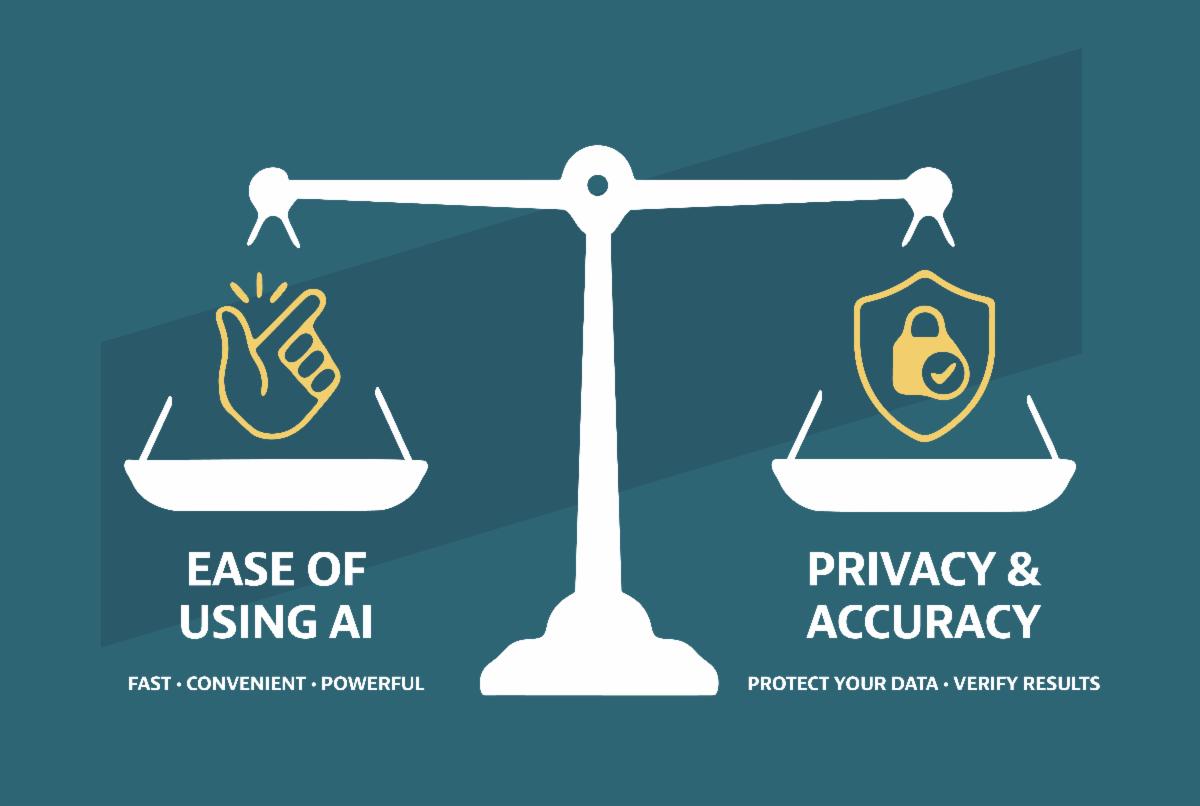
Before you ask AI your next financial, tax or estate planning question, there are two important things you should know.
- The first is where your information goes.
- The second is how much confidence you should have in the answer you receive.
Where Does Your Information Go?
A recent court case caught my attention because it involved someone who uploaded information related to legal matters into a public AI platform. The court ultimately ruled that the information did not receive the same protections that might otherwise exist in a confidential attorney-client relationship.
The legal details aren’t important to most of us. The lesson is.
When we upload information into an AI platform, we should understand what information is being shared, how it is stored, and what privacy settings are available.
Not all platforms work the same way. Some offer stronger privacy protections than others.
This is one reason we use secure systems when exchanging confidential information with clients. When clients send us tax returns, estate planning documents or account statements, we direct them to our secure ShareFile portal. When appropriate, we use secure email delivery when sending confidential information to clients.
No system is perfect, but the principle is simple: sensitive information deserves additional protection.
Before uploading documents into an AI platform, take a moment to consider whether the information is truly necessary and whether you’re comfortable with how that information may be stored and used.
How Much Confidence Should You Have in the Answer?
The second issue is accuracy.
One of the most impressive things about AI is how confidently it presents information. Ask a question and you’ll often receive an answer within seconds that sounds polished and authoritative.
Unfortunately, confidence and accuracy are not always the same thing.
AI systems can misunderstand questions. They can rely on outdated information. They can reference rules that have changed or provide answers that sound convincing but are simply wrong.
Even when the information is technically correct, it may be missing important context.
An AI program might review an investment statement and conclude that someone can afford to retire. What it doesn’t know is that the person plans to buy a second home, help a grandchild through college, support an aging parent or leave a charitable legacy.
Those details matter.
The same is true for tax and estate planning decisions. AI can be a great starting point for learning and generating ideas, but it rarely has the complete picture.
Final Thoughts
I believe artificial intelligence will become one of the most useful tools available to individuals and businesses. But like any tool, it works best when we understand its limitations.
Before you upload information, think about where it is going.
Before you act on an answer, make sure it is correct.
AI is helpful.
But it still needs a human.